This is a huge topic, and one which is arguably the base technology for civilization, yet it scarcely even has its own literature and is exceedingly difficult to research. About the only type-related areas this doesn't cover are the casting of type in machines (covered in Composing Linecasters, Noncomposing Linecasters, Composing Typecasters, Noncomposing Typecasters), the casting of duplicate printing surfaces (covered in Stereotype Plate Making), the stripcasting of leads and rules (covered in Strip-Casters), the electroforming of images, and of course the actual use of type. It does, however, cover the making of matrices for composing linecasters and typecasters and the electroforming of matrices.
NOTE: Most of this isn't done - it's an ambitous outline of future projects. The parts which do have some possibly useful content are:
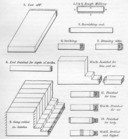
Introduction to the Processes
[NOT BACK ONLINE YET; it desperately needs rewriting] Overall Process. [Survey of the Transformations in Matrix Making]
The American Typecasting Fellowship
If you are seriously interested in making metal type, you really should belong to the American Typecasting Fellowship.
Literature
Literature primarily on making matrices for typecasting, but not necessarily on typecasting itself. This section consists of some literature reprinted here, a few newly published pieces (letters by Jim Rimmer on pantograph engraving), some pointers to literature available elsewhere online, and a few annotated references to literature which is neither reprinted nor free but which is important enough that you really ought to buy it.
The collection here is not exhaustive. For a more thorough list, see the Bibliography, below.

The Pantograph and...
A More Intricate Tool: The Pantograph and the Regularization of Printing Type.
Views of Type Foundries
[NOT YET ONLINE - and far from complete (or even presentable)] Views of type foundries, inside and out, ancient and modern. I have found that as I set up my own type foundry, these views become increasingly interesting.
Bibliography
WARNING: This bibliography is incomplete, out of date, and unmaintained. I started it when I thought that a single comprehensive bibliography was practical. It's still here because I have hardcoded references to it. Use with caution, if at all.
For making printing types, casters/molds, matrices, and punches. For a bibliography of typeface history and design, see Type & Type-Making History and Design -> Bibliography. (There is some overlap between the two, of course.)
[TO DO: Move/incorporate this meta-section into a new, centralized meta-section: The Past and the Future: Preserving Machinery and Processes"]
These Notebooks are some of several scattered throughout CircuitousRoot which address issues of importance to a hands-on, machine-maker's understanding of old mechanical technology. See also:
Making Type and Preserving Type-Making
[NOT YET ONLINE - this is work in progress] It is obvious that the best way to preserve the making of metal printing type is to make type. Traditions survive only when the live. Yet in the early 21st century we are destroying, rapidly, the technological history of the making of type by continuing to use and abuse our inherited equipment in ways which are no longer appropriate. This, further, distracts us from applying to type-making the best of 21st century engineering. If we do not change our ways, we're going to lose it all and yet fail to understand what we have lost.
Even if you read no further here, read John R. Watson's book Artifacts in use: The Paradox of Restoration and the Conservation of Organs. (Organ Historical Society Press, 2010). Although Watson's nominal topic is the pipe organ, everything he has to say applies to typefounding machinery. The middle ground that he advocates, "Restorative Conservation," is one that we must come to occupy. See: http://aiu.PreservationTheory.org/
Workshop Notes for Restorative Conservation
[NOT YET ONLINE - this is work in progress] It is fine to talk about "restorative conservation" with regard to working industrial equipment, but what does one actually do in attending to these principles while fixing an old type casting machine? The conservation and museum community is ahead of us here, with various Guidelines for work (see John R. Watson's page of "Conservation Resources", http://aiu.preservationtheory.org/presdocuments.aspx , for examples - with, of course, an emphasis on his own field of pipe organ conservation but also with more general material). But these don't address all of the issues which confront the "antiquarian machinist" in the role of conservator - someone who is more likely to be working in a machine shop than a conservation lab, and who may spend more time trying to determine the wiring for obsolete 1920s electrics than the composition of 18th century glue. The notes here are just notes - they don't presume to be either authoritative enough or comprehensive enough to be "guidelines" - but they're a start.
The Type-Making Machinery of the Future
[NOT DONE] Going beyond the "restorative conservation" of old equipment, the very best ways to conserve type-making machinery while preserving their capabilities are (a) to make new machines on 21st century principles to accomplish identical ends, and (b) to make new instances of existing machines. (I reject completely the idea that it is somehow wrong to duplicate an old machine design - this is nothing more than the hubris of the romantic artist misapplied to the sphere of machine building.) Both of these ways, but especially the second, involve reverse engineering the old machines. For more on this see the CircuitousRoot Notebook On the Reverse Engineering of Big Old Machines.
Measurement for Typefounders
Point Conversion Tables. Notes on the American Inch. History and Size of the American Point.
Dimensions and Features of Type
The dimensions of type (including fractional-set vs. point-set type and spacing) and [TO DO:] physical features of type (nicks, angle and wing bodies, etc.) at a level of detail appropriate to a typefounder trying actually to make type.
See also the Notebook on Identifying Metal Type (in the Noncomposing Typecasters section), which includes discussions of features such as pin marks.
A Typefounders' Polyglot Lexicon
[NOT ONLINE YET] Typefounding has, from the 15th century to today, always been an international field. In researching the technologies of type as they have been recorded in many languages, it is very useful to have a lexicon of the basic terms in these languages.
Hand Punchcutting in Steel
Pointers to Notebooks on this topic: For this topic practically considered, see the "Punchcutting by Hand in Steel" section of Making Matrices (below) . For the literature on this topic, in the Literature section above see Punchcutting in Steel by Hand section and, of course, the General Literature on Making Printing Matrices and Types section.
Note that while the English term "punchcutter" seems specific to cutting punches in steel, the German equivalent, "schriftgiesser," includes both punchcutting in steel and patrix cutting in soft metal.
Alternative Matrix-Making Before Electroforming
Hand-cut wooden types [v. Davis & Carter's Moxon]. The Sanspareil matrices. Sand-casting [v. Davis & Carter's Moxon]. Lead matrices [v. Mosley & Nelson].
The Issue of Patrix Cutting in Soft Metal
A Survey of the Errors. A Survey of the Data.
The various "alternative" matrix-making methods described earlier were all special cases. But from 1845 through the first half of the 20th century punchcutting in steel (whether by hand or, later, machine) was to a great extent replaced by cutting "patrices" (pattern types) in soft metals (typemetal, brass) first by hand and later by machine. Matrices were electroformed from these soft metal patrices. For display types, particularly ornamental and blackletter types, patrix cutting became the dominant method. Yet because of a romantic backlash against machine methods in type-making in the early 20th century, in North America this century-long phase of type-making has been erased from the historical record.
Patrix Cutting in Soft Metal (By Hand and Machine)
Pointers to Notebooks on this topic:
The recognition of the importance of patrix engraving by hand (and later by machine) was suppressed in America (whereas in Europe it was simply acknowledge as one of the major methods of type-making). This has led to difficulties with its documentation, and that is reflected in the way it is covered here.
Because an explicit and rather aggressive argument needs to be made to re-establish the historical importance of patrix engraving in the history of type, the primary collection of references to it a part of a polemical Notebook on The Issue of Patrix Cutting in Soft Metal (see above) and within that especially the Survey of the Data. However, the sources cited there only incidentally reveal anything about the technical practices of patrix cutting.
For the practical technical literature on (and illustrations of) the techniques of patrix cutting by hand, see Reprinted Literature on Making Printing Matrices and Types -> Patrix Cutting by Hand in Soft Metal -> (Interestingly, in several situations this will consist primarily of pointing out that a published illustration said to show "punchcutting" shows instead patrix cutting in soft metal.) There isn't really much technical literature on the subject. Also, of course, see the General Literature on Making Printing Matrices and Types section.
For the literature of patrix cutting in soft metal by machine (pantograph), see the Notebook of literature on Machine Engraving. This covers cutting punches in steel, patrices in soft metal, and the direct engraving of matrices; the similarities of machine use outweigh the differences in materials and workpiece forms.
At such point in the future as I get to investigating patrix cutting at a practical level, I'll document it in the "book" Making Matrices . In it see the Patrix Cutting by Hand in Soft Metal and Pantographic Punch and Patrix Engraving sections.
Aside: I find that I am inconsistent in my use of the terms "engraving" and "cutting," using either or both to describe techniques which involve cutting with the graver, filing, and cutting with rotary tools. The use of these terms in the literature is similarly inconsistent, using the term "engraving" for work involving each of these operations.
Making Matrices
An attempt at a comprehensive treatise.
[THIS IS A WORK IN PROGRESS]
Galleries & Mythbusting: A Matrix Miscellany
Galleries of Images: Matrices, Punches (Cut by Hand and Machine), Patrices (Cut by Hand and Machine), Working Patterns for Pantographic Engraving.
Mythbusting: [TO DO: A Timeline of Matrix Making] Beyond (and Before) Benton. From the Optical Scale to Optical Scaling. [TO DO: The Myth of the Benton Pantograph.]
Typemetal
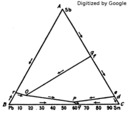
[TEMPORARILY OFFLINE PENDING REVISION] Typemetal considered generally (for hand and machine casting).
Trying to sort out the distinctions between the alloys used for "foundry" type, "sorts" casters, Monotype (several alloys), and linecasters. Linotype Metal as a eutectic ternary alloy.
Makeshift Typecasting
It is possible to cast matrices made of typemetal from type made of typemetal. This was a traditional process employed in emergency situations. There were a few machines developed specifically for this. Taylor's Adjustable Type Mold. The Typofix.
It is also possible to cast type from stereotype matrices (which are quite different from typecasters matrices). Turner's apparatus envisioned this. (See also the "Mat Holder Stick" for the Ludlow; although its production versions employed metal mats, its patent envisioned the use of stereotype mats.)
(Aside: Historically, this isn't a particularly important branch of typefounding. It only gets its own section here because it is in equal parts matrix making and hand casting and didn't fit anywhere else. It is, at least, quite interesting.)
Type After Casting
Everything that happens to type after it leaves the casting mold or machine but before it is distributed by the user into the case. Regular finishing operations (rubbing, filing, grooving, cutting nicks). Cutting kerns. Mortising. Fonting. Packaging.
Matrix Storage
It doesn't seem important at first. A few thousand mats later, it's very important.
Type & Type-Making History and Design
Punch, Patrix, and Matrix Makers. Castermen. Type Drafters. Type Designers. Type Scholars and Administrators.
Typeface Index. Bibliography (Type Design).
Miscellany, and Mysteries
[NOT ONLINE YET] [Other Ways of Making Metal Type.] [Other Materials for Cast Type; composition, zinc/Mazak] [The Form of Type; stereotyping; deep impressions.] Otherwise Uncategorized Patent Literature for Type-Making.
All portions of this document not noted otherwise are Copyright © 2008-2016, 2022 by David M. MacMillan.
Circuitous Root is a Registered Trademark of David M. MacMillan.
This work is licensed under the Creative Commons "Attribution - ShareAlike" license, version 4.0 International. See http://creativecommons.org/licenses/by-sa/4.0/ for its terms.
Presented originally by Circuitous Root®