I've always been obsessed with books and reading; I have no memory of a time when I could not read, or was not reading. Just before college (1980), I became interested in typography, and in graduate school (1984) started collecting manual typewriters. Still, somehow it took me a quarter of a century to realize that all along this was just another aspect of my desire to merge art and technology. This really started to come together in 2008 with the acquisition of my first two Linotypes and the realization that art and technology join most concisely in the creation of physical printing types.
This present page lays out many of the ways in which words may be created as physical things. I'd like to explore all of them, but never will - there are too many. The primary set of Notebooks here is " The Circuitous Root Typefoundry and Press," which investigates "hot metal" typecasting and printing. Other Notebooks will follow as they happen.
There is no perfect classification for all of this. I'll start out with four major, but quite arbitrary, divisions of the subject:
Of course, the last of these divisions violates the very organizing principles of this section: making words as physical things. Word-making is just too basic to humanity; everything slides into everything else.
1.1.1 - Relief Printing Involving Casting Metal Type
The CircuitousRoot Typefoundry and Press
Researching, Practicing & Documenting Type-Making & Hot Metal Printing.
The Linotype & Intertype composing linecasters, the Ludlow noncomposing linecaster, the Elrod stripcaster, punchcutting, matrix engraving, typefounding, letterpress printing, &c.
1.1.2 - Relief Printing Involving Cold-Forming Metal Type
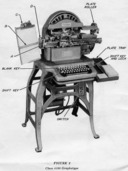
The Graphotype and Addressograph
[NOT ONLINE YET] The Graphotype is a cold-metal print-embossing machine which produces relief type on a metal plate. The type-plates so produced can then be printed on the Addressograph machine.
The Addressograph-Multigraph Corporation also produced the Multigraph and Multilith presses, and acquired VariTyper ( variable set impact typewriters) and phototypesetting equipment) and Bruning (diazo printing and microfiche).
1.1.3 - Relief Printing with Nonmetallic Type and Plates

Molded Plate and Stamp Making
[NOT DONE] [The EVA-PRESS.] [Rubber Type Sets (Toy, Signmaking)]
Note that companies making equipment for stereotype plate making and electrotype plate making often crossed over into rubber plate making. Example: Ostrander-Seymour.)
Note also that the process of making rubber stamps/plates often involved casting type (which was used to make the matrix from which the stamp/plate was molded). The Ludlow Typograph in particular was popular for this.
Note: T. J. Lyons was instrumental in the revival of 19th century ornamented typefaces in the 20th century. He often employed rubber reproductions of his vintage type in his own printing, thus using it while conserving it. ( Phototypesetting also played a curiously anachronistic role in the later part of this revival, through the reproduction and re-issuing of material from private collectors such as Lyons [and Dan X. Solo, I believe].)
Cut Plate Making
This is perhaps the oldest process, as it encompasses woodcut making and the later methods of wood engraving. It also covers modern linoleum block cutting (and even potato cutting, as far as that goes). However, for now, all that I have here is material on one commercial system for rubber plate cutting, that of the Ti-Pi Company.
1.1.4 - Relief Printing with Media Other than Ink
Note: See also Hot (Foil) Stamping, below. Foil stamping was often done by printers, but is really, it seems, more a lettering process than a printing process.
1.1.5 - Relief Printing Processes Not Discussed:
Note: In theory when (or if) I get around to looking into the various 19th century photomechanical "process" illustration technologies they should go here. They might just end up in the CircuitousRoot Typefoundry and Press, though. Electrotyping (or at least a placeholder for it) is already there.
Phototypesetting
A very few phototypesetting resources, encountered randomly.
Note: Phototypesetting played a curiously anachronistic role in the later part of the revival of 19th century ornamented typefaces in the 20th century, through the reproduction and re-issuing of material from private collectors such as T. J. Lyons [and Dan X. Solo, I believe]. Lyons also employed rubber stamp making techniques in his own printing (to help preserve vintage type while still using it).
Lithography
A very few lithography resources, encountered randomly. [NOT DONE] [Multilith literature]
Spirit Duplicators
Spirit Duplicators use a prepared master sheet (often made by placing it behind an original as it was typed). In a duplicating machine, a fluid is then used to transfer a portion of the image on the master to a printed sheet. The most common spirit duplicators (in the US) were those made by the Ditto Corporation (colloquially, spirit duplicators were called "ditto machines.")
[TO DO: scan Duplicopy literature; n.b., Duplicopy also sold pre-made Hectograph originals.]
Hectographs (Gelatin Duplicators)
The hectograph process used an original prepared with a special ink which was transferred to a gelatin medium; printing was then done from the gelatin. A hectograph master is right-reading, while a spirit duplicator master is wrong-reading. [TO DO: scan Duplicopy (brand) pre-made Hectograph originals] n.b., Duplicopy was better known for its spirit duplicators.]
1.3.1 - Planographic Printing Processes Not Discussed:
Note: It is unclear whether "dry transfer" lettering should be considered here, as it is an "offset" technology of sorts, or below in hand lettering. For better or worse, since composition with dry transfer is done one letter at a time, by hand, I've included dry transfer lettering below, under "Writing and Lettering By Hand."
Note: These are machines used for printing complete, finished items (such as address labels, whole pages, or individual works of art) all at once from prepared stencils or masks. For stencil machines intended for making stencils for later use by cutting letters one at a time (such as the Diagraph), or for the cutting of stencil-like figures for security (not stenciling) purposes in checks, see " Stencil Cutting Machines" in " Lettering by Machine," below. For sets of punches used manually to create stencil plates, see Manual Stencil Plate Making Sets (below).
Mimeograph
[NOT DONE] Mimeograph Stencil Duplicator (But for a good site on using stencil duplicators to make comic and art books, see Sarah Morean's Make Better Books (http://makebetterbooks.com/ ) [TO DO: photograph Mimeoscope.]
Diazo
Also known as "whiteprint" and "blue-line" printing. This is known primarily as a technique for reproducing engineering drawings, but there were office-environment general printing systems which used it (e.g., the Bruning "Copyflex"). This is a masking process.
1.5.1 - Inkjet Printing Processes Not Discussed:
(Well, I'm not going to cover any of them, save only to note that "giclée" is nothing more than a fancy term for inkjet.)
2.1 - Machines Using Relief Type
The machines discussed here all produce a single written text upon a finished object (a typed page, a calculator tape, a check, a pen body, etc.) They are closely related to relief printing, but they're really mechanizations of writing.
Typewriters
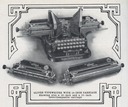
How to Use Corona. Vari-Typer Type Faces (1946). Oliver oiling instructions.
Teletypes
[NOT DONE] This is a link "up and over" to Telegraphy, the second division of which concerns Teletypes. That section concerns Teletypes generally and (for the most part) 5-level tape systems specifically. For 6-level tape and related systems, see the Teletypesetter material in "Tape and Remote Control of Linecasters". I don't do much with 8-level tape Teletypes.
Check Printers and Embossers
[NOT DONE]
See also Bank checkwriting machine, by "stencil" cutting, in Manual Stencil-Cutting Machines
Hot Foil Stamping
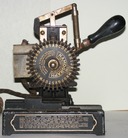
An instruction booklet (pre-1943) for the Kingsley machine. Some photographs of the Namograph (hot gold leaf stamping on cylindrical pen bodies, ca. 1920).
2.2 - Machines Using Traced Templates
The Varigraph
[NOT DONE] [from Madison, WI!] See ad, Graphic Arts Monthly Vol. 25, No. 9 (Sept., 1953): 121. A template-driven movable pantograph. [scan material; photograph examples]
Pantographs
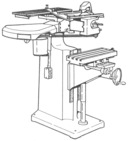
This started out as a set of Notebooks about pantograph engraving machines, specifically. It has grown into a relatively chaotic compendium of information on pantographs generally.
2.3 - Stencil Cutting Machines
Manual Stencil-Cutting Machines
The Diagraph. The Ideal No. 1. The Marsh Model Q.
Bank checkwriting machine, "stencil" cutting (1880s); this cut "stencil" style numbers through a check, but this was for the purpose of security, not for use as a stencil.
Note: For machines for printing from stencils of various kinds (e.g., stencil duplicators such as the Mimeograph) see Stencil and Mask Principles (above). For sets of punches used manually to create stencil plates, see Manual Stencil Plate Making Sets (below).
I suppose I could add here early 20th century pen-based facsimile writing systems and late 20th century pen plotters. Compared to these, you'd think that machines for just drawing straight lines on paper would be quite dull, but in fact a Hickok Paper-Ruling Machine is a magnificent thing.
A Brief History of Lettering (vs. Type)
Lettering is not type. It is much older than type, of course, and it has always had a separate history of its own. It has been ignored to the point that even recent periods (the practitioners of which are sometimes still alive today) have been erased entirely from our consciousness of history. Lettering is, however, the true historical antecedent of what is today taught under the misnomer "digital typography" (which is really computer-aided lettering, not typography at all).
Pointed Pen Writing Systems
[NOT DONE] Johnston's Twentieth Century reinvention of broad-nib pen "calligraphy," while admirable, has completely obscured the fact that this was not how people wrote with the pen for the several hundred years before the typewriter keyboard displaced it. [The Palmer Method.] [Bibliography for Spencer and for Ziller.]
The Ruling Pen
[NOT DONE] A basic tool of the Drafter and of the Advertising Letterer through the early Twentieth Century.
Manual Stencil Plate Making Sets
Sets of punches used to cut, by hand, lettering and designs through metal plates to create stencils. In the 1860s-1880s these were manufactured by several firms (most prominently S. M. Spencer) and sold to canvassers who would make personalized stencils for customers at fairs and elsewhere.
Note that in the contemporary literature the punches used in these sets were more frequently termed "dies" (though this use would be incorrect in present industrial practice).
Note: For machines for cutting stencils, see Manual Stencil-Cutting Machines (above). For machines for printing from stencils of various kinds (e.g., stencil duplicators such as the Mimeograph) see Stencil and Mask Principles (above).
Note: The making of these "stencil dies" (that is, punches) is itself closely related to the art of punchcutting in type making. For this see CircuitousRoot Typefoundry and Press -> Making Printing Matrices and Types -> Making Matrices -> Punch Cutting by Hand. Those engaged in this are, similarly, related to type punchcutters; for them, see CircuitousRoot Typefoundry and Press -> Making Printing Matrices and Types -> Type & Type-Making History and Design -> Punch, Patrix, and Matrix Makers.
Dry Transfer Lettering
Prestype. [Formaline.] [Image-N-Transfer.] [Letraset®.]
Other Writing & Lettering Machines, Tools, and Processes Not Discussed:
The methods of writing are innumerable. In the list above, it's pretty obvious, for example, that I failed to cover the broad-tipped dip pen (post-Johnston "calligraphy"), the brush (the primary writing tool in much of the far East), or stonecutting (the basic influence on Western capital letters) - but did you notice that I failed to mention neon tubes?

Exploring Dr. Hershey's Typography
Also, Greek fonts for Varkon. [TEMPORARILY OFFLINE PENDING REFORMATTING]
Essays on Digital Typography and Lettering
[NOT DONE] On Leading and "Kerning" in Digital Type, and the Enthusiastic Abandonment of Understanding.
An Office Miscellany
Paper-handling other than printing/lettering intended for use in an office environment. Also, for lack of a better home, miscellaneous vintage office supplies and equipment.
Collier Stationery Co., Keokuk, IA - circa 1909.
Character Coding and Representation
In Search of the Slashed Letter 'O'.
Keyboard Topics
[QWERTY not designed to slow typists down.] The origins of the "etaoin" keyboard. "Logotype" keyboards.
Southward, Powell, and Joyner's Practical Printing (1911), from which the page icon of a piece of type is taken, is in the public domain.
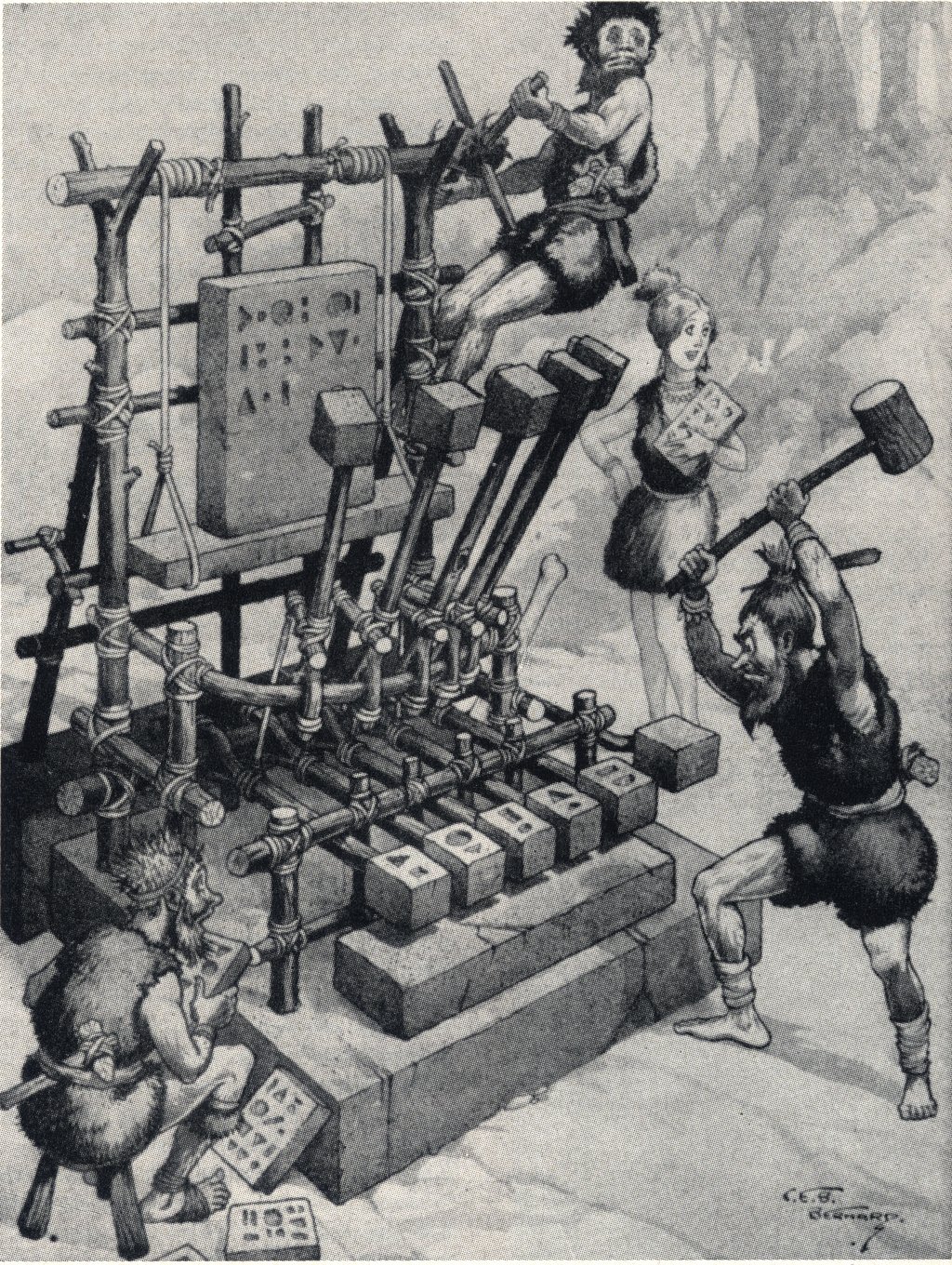
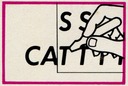
The cartoon of neolithic machine word-making is from The Inland Printer Vol. 134, No. 1 (October, 1954): 70. The copyright for this issue of The Inland Printer was not renewed as would then have been required. I believe that it therefore passed into the public domain upon the expiration of its original copyright in 1982.
The certificate for the Best Equipped Office of 1939 which is used here as a linking image is Copyright 2010 by Sara Wrzesinski, Proprietor of Raky Press (http://www.rakypress.com/ ) All Rights Reserved. It is not licensed under the same terms as the rest of this page. It may not be reproduced without the written permission of Sara Wrzesinski.
All portions of this document not noted otherwise are Copyright © 2006-2022 by David M. MacMillan.
Circuitous Root is a Registered Trademark of David M. MacMillan.
This work is licensed under the Creative Commons "Attribution - ShareAlike" license, version 4.0 International. See http://creativecommons.org/licenses/by-sa/4.0/ for its terms.
Presented originally by Circuitous Root®